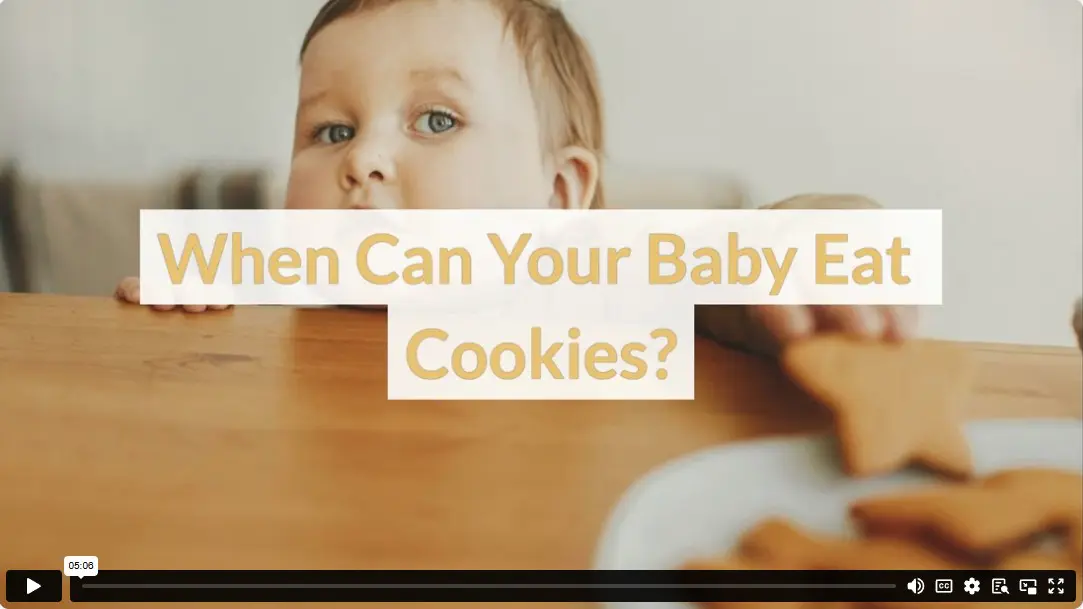
When you’re starting solids with your baby, every new food can feel like a big decision. You’re balancing curiosity, nutrition, safety, and those adorable little reactions to first tastes. It’s completely normal to wonder when cookies fit into the picture, especially if you’re thinking about your traditional birthday chocolate chip cookies or treats at a family gathering.
Cookies can be part of your baby’s food journey once your little one can confidently handle solid foods. By considering the right time and the right ingredients for your child’s first cookie, you balance your concerns with the joys of dessert.

(prostooleh/Freepik)
Start With Baby’s Readiness
Around 6 months, many babies can handle solids. But they need to show developmental readiness, such as sitting with support, grasping bite-sized objects, bringing food to their mouth, and showing interest when you eat. You can plan for solids based on your baby’s age, but these signs help you decide if they’re really ready for table food.
Even when these signs are present, you may want to wait to introduce cookies. If your baby starts with purees, for example, you’ll want to move to thicker textures and food that requires chewing before offering anything cookie-like.
Consulting your pediatrician is always a good idea when you’re introducing solids. They can confirm your little one’s readiness and give you ideas on how to start the process. Medical support is especially important if your baby has difficulty swallowing, reflux issues, feeding concerns, developmental delays, or a history of allergies.
If you’re unsure, talk to your doctor. A quick check-in and professional input can bring peace of mind and make these new milestones more enjoyable.
Choose a Baby-Friendly Cookie
When you picture a cookie, you might think of melting chocolate chips, sugary dough, crunchy walnuts, and a slight crisp around the pillowy center. But most experts recommend saving these regular cookies until toddlerhood to avoid choking hazards, limit added sugar and preservatives, and promote a healthy diet early on. Baby-friendly cookies follow a different set of rules for ingredients, texture, and size.
Ingredients in baby-friendly cookies typically support early feeding rather than overwhelm it. Look for treats made with mashed fruits for sweetness, mild ingredients like oats, soft flour blends, and natural flavors rather than sugary cookies. A banana oatmeal bar or applesauce cookie hits the right notes.
Texture is the most significant factor for baby-friendly cookies. You want their first baked good to break down easily with saliva and gentle pressure, so your little one can chew it without teeth. Once your baby is older and their pearly whites are poking through, you can consider hard teething biscuits. The key is still choosing a cookie that dissolves easily to prevent choking.
Size also matters for a baby’s first cookie. Too small, and their chubby fingers smash it to pieces before they can pick it up. Too big, and you risk them choking on a huge bite. A baby-friendly cookie is often a long and skinny rectangle so your child can hold one end and gnaw on the other. The key is to balance grasp with choking.
Introduce Cookies Thoughtfully
Offering a baby-friendly cookie is simply adding another food experience to your baby’s growing list. It doesn’t need to be a big deal. Here are a few tips to thoughtfully introduce your little one to cookies:
- Offer a cookie to an alert and calm baby so they can enjoy exploring the new food.
- Provide their first treat in a relaxed environment so everyone is comfortable.
- Start with a small piece of cookie to test if your little one is truly ready.
- Pair a cookie with water and a familiar food to establish balanced habits from the start.
- Choose cookies with familiar ingredients to avoid allergic reactions.
- Limit one common allergen (wheat, eggs, nuts, etc.) per cookie to watch for concerns.
- Introduce cookies early in the day to watch for potential reactions.
- Stay close and enjoy a cookie with your baby to keep the experience safe and fun.
If allergies run in your family, your pediatrician can advise you on introducing cookies safely. Keeping your baby’s first taste of cookie simple and thoughtful can set the stage for desserts to be a joyful and balanced part of their life.
Include Baby Cookies in Family Moments
Holidays, birthdays, parties, and family gatherings often include sweets, and you may be thinking about how to handle those experiences with your little one. By adding baby-friendly cookies to the menu, you can include your child in these celebrations.
If your family orders cookie deliveries every Halloween, for example, you can box a few pumpkin oat cookies for your little one. Then, they receive a package and can snack alongside the rest of the group. Or if you enjoy baking at the end of a long week, you can create a small batch of banana oat bars to share your tradition with your baby. These small experiences help you build family rituals that safely include your child.
Sweet Moments for Your Sweet Baby
When you choose soft, fruit-based cookie options and introduce the new treats thoughtfully, you can make room for sweet moments in your sweet baby’s early food experiences. From there, they can work up to more mainstream cookies as their feeding abilities improve. Just make sure to serve cookies in moderation. This supports your child’s health and preserves the joyful novelty of a delicious, freshly baked cookie.
Video
Infographic
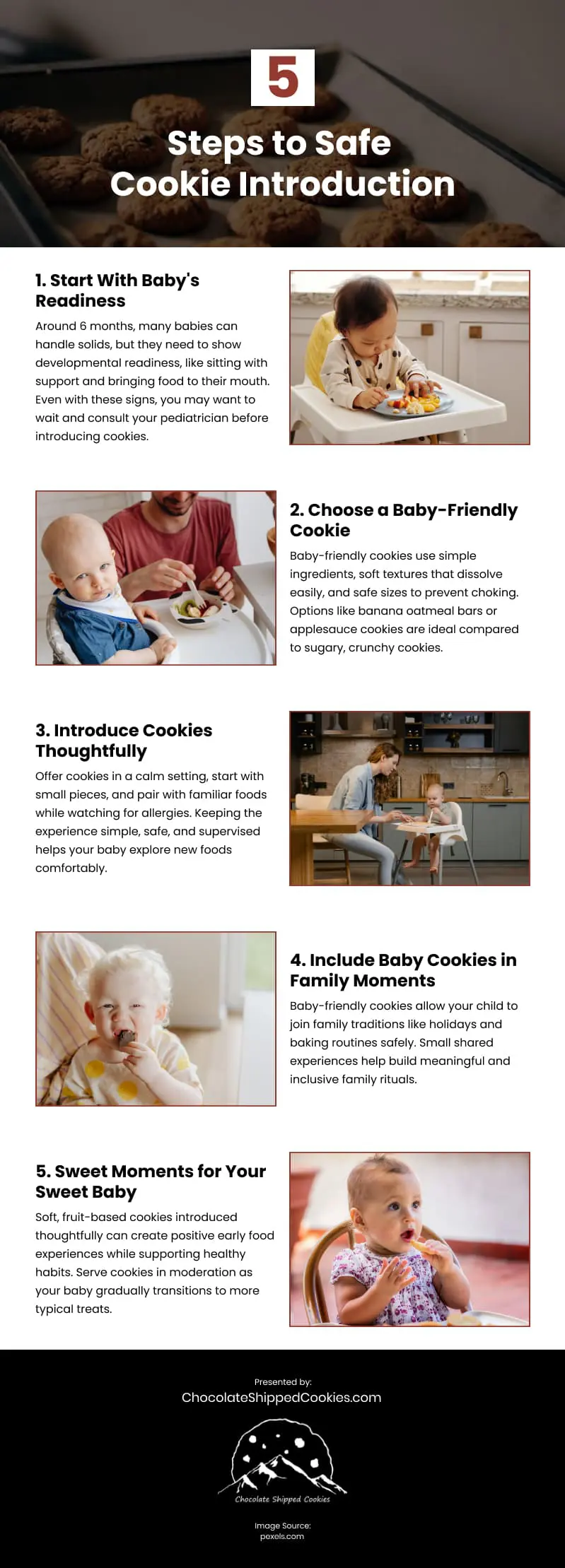
Introducing cookies to your baby during the transition to solid foods can be a fun and meaningful milestone when done thoughtfully and safely. Explore this infographic to learn the key steps for a safe cookie introduction.